Wednesday, January 19, 2022

Why Natural Environment? Ask the SCIC Director...


Why Natural Environment?


Ask the SCIC Director:

Why should I enthusiastically partner with childcare programs to provide services in the natural environment?

 ·         Because children with disabilities have a right to access and meaningful participation in early childhood settings

·         Because you can offer suggestions on the best way to include a child with a disability in the classroom

·         Because childcare teachers can provide valuable information to you about the child’s engagement in the classroom

·         Because you can support the family of a child with a disability by accommodating their child’s needs in their childcare program.

·         Because a childcare classroom/setting is a Natural Environment and early intervention services are required to be provided in the natural environment according to the Individuals with Disabilities Education Act (IDEA).


Natural Environments Defined:

A Natural Environment is any location or space where children without disabilities spend their time. This includes the home, community settings, and community early childhood programs. Early care and education classrooms that enroll children from the community are natural environments. Children with and without disabilities can play and learn together in these settings. For children birth to three with identified disabilities, the IDEA specifies that early intervention services should be provided in the natural environment. The Americans with Disabilities Act considers allowing early intervention service providers to support a child with a disability in their classroom to be a reasonable accommodation.


Tips for how to partner with childcare providers:

·         Communicate with the child’s family about the benefits of providing early intervention services within the child’s early care and education program.

·         Ask parents to provide consent to allow you to communicate with the child’s teacher about their IFSP goals and to learn about how the child engages in classroom routines and activities from the teacher.

·         Work with the childcare provider to schedule a time to provide services that fits into the classroom schedule.

·         Share your contact information with the childcare provider and ask for them to share theirs with you so you can communicate about the child’s needs


What about Covid?

The CDC just released COVID-19 Guidance for Operating Early Care and Education/Child Care Programs (https://www.cdc.gov/coronavirus/2019-ncov/community/schools-childcare/child-care-guidance.html)

The guidance includes a section on Children with Disabilities or other Healthcare Needs. This guidance provides strategies that childcare programs can use to safely provide access to the classroom for direct service providers. The CDC has also provided guidance to direct service providers regarding safety when supporting people with disabilities. https://www.cdc.gov/ncbddd/humandevelopment/covid-19/guidance-for-direct-service-providers.html?CDC_AA_refVal=https%3A%2F%2Fwww.cdc.gov%2Fcoronavirus%2F2019-ncov%2Fneed-extra-precautions%2Fdirect-service-providers.html


Learn more:

·         Explore the SC Child Care Inclusion Collaborative website to learn more about the services that we offer to promote inclusion in childcare settings. www.scinclusion.org

·         Log in to SCEILS and complete the free online module: ADA Basics for Families Making Child Care Decisions to learn more about the childcare system and to gain information to help families who are searching for childcare. You may be asked to create an account with ProSolutions training. If so, and you don’t have a SC registry training id number you can enter 000000 in that field. 

·         Explore the Team for Early Childhood Solutions and BabyNet websites to learn more about the early intervention system (https://uscmed.sc.libguides.com/tecs) (https://msp.scdhhs.gov/babynet/)




Ordering Open! At-Home COVID-19 Test Kits

ABLE SC logo

Now open: 
Every household in the United States 
can order four free COVID-19 rapid tests!

Take advantage of this program today, and share with your family and neighbors. While we know the federal administration's rollout plan is imperfect, it is a chance to get more tests to more people, including our disability community that experiences barriers to access.

When preparing to order: 

  • The information needed for the order is first name, last name, and household address 
  • When you order, you will be signed up to get one package of four COVID-19 rapid tests for your household 
  • Your order cannot use a place of business address 
  • To track your package, include your email address when prompted on the form. The same email address can be used to track multiple orders 
  • Your package will take 7 to 12 days to ship 
  • Order your test kit today, before you need it! 

Why order COVID-19 testing kits so you can test at home? 

Able SC's very own Jerri Davison shared her story, "When my daughter got sick, having a home test ready and available allowed my family to contain COVID from spreading in our home. I'm at higher risk of getting very sick because of my depression, and my mom, an older adult, also lives with us." 

Order your COVID-19 Test Kit

Still have questions? 

Contact the Disability Vaccine Access Hotline at (800) 787-6046  

South Carolina Disability Vaccine Access Hotline:  A hotline staffed by Able South Carolina and Disability Rights South Carolina designed to provide people with disabilities information about many different aspects of the COVID-19 vaccine.  These resources include but are not limited to: 

  • Address any concerns you may have about getting the vaccine
  • Find a trusted medical provider  
  • Assist with vaccine appointment scheduling 
  • Navigate transportation to get your vaccine  
  • Offer resources and guidance on transportation to and from vaccine  
  • Answer some of the most common disability related questions related to the COVID-19 vaccine  
  • Provide information about accessible vaccine sites based on crowd sourced data  
  • Address other disability-related barriers about the vaccine you may be experiencing      

Disclaimer:  The staff of the Disability Vaccine Access Hotline are not licensed medical providers.  They are unable to offer medical advice about the best vaccine for you or predict how the vaccine may affect you or your family 

Tuesday, January 18, 2022

BrainStorm Meets TOMORROW!

Brain Injury Association of South Carolina logo
 
BrainStorm logo

A support and advocacy group for young adults 

who have been impacted by brain injury

Meet Your BrainStorm Peer Facilitator: Jasmine Norris

Brainstorm Peer Facilitator Jasmine Norris photo with her dog

My name is Jasmine Norris, I'm 28 years old and I'm on the Board of Directors for the Brain Injury Association of South Carolina. I graduated from University of South Carolina School of Law in 2020, and I am currently working full-time as an attorney and part-time as an EMT for Lexington County. I've had 6 diagnosed TBIs, one of which ended my college soccer career. Having personally dealt with the lack of resources and support that often comes with head injuries, I'm very passionate about helping provide support and education to individuals affected by brain injuries, concussions, etc. It's hard dealing with an invisible injury, especially if you don't have someone in your life that understands what you're going through and can provide the resources or support you may need. My hope is to be that person for anyone that needs it, by facilitating this group. 

What is BrainStorm?

BrainStorm is a group for young adults (ages 15-29) who are striving to advocate, educate, and create a safe space for individuals that have been affected by concussions, traumatic brain injuries, or acquired brain injuries in any capacity. 
This group strives to bring visibility to this 'invisible' injury through education, advocacy, open-communication, and support. 

WHO: 

• This is a group is open to survivors, family, friends, and advocates of brain injury  
• Anyone between the ages 15-29 years of age is encouraged to attend 
• Someone who has a brain injury that impacts their life in at least one way on a regular basis 
  •   Traumatic Brain Injury (TBI) 
  •   Concussion (also known as mild Traumatic Brain Injury - mTBI) 
• Someone whose parent, neighbor, friend, sibling, significant other, etc. is living with a brain injury 

WHAT ARE THESE MEETINGS:

• Join Facilitator, Young Adult, and Brain Injury Survivor Jasmine Norris as she assists youth in: 
  •   Finding community and peer support - you are not alone in your experience with brain injury! 
  •   Educating anyone and everyone in your community about brain injuries 

WHERE:

• Virtual Meetings will be held on Zoom once a month 
• 3rd Wednesday of every month from 6:30 - 8 pm EST 
• 2022 Dates: 
  •   January 19 -- TOMORROW!
  •   February 16 
  •   March 16 
  •   April 20 
  •   May 18 
  •   June 15 
  •   July 20 
  •   August 17 
  •   September 21 
  •   October19 
  •   November 16 
  •   December 15 

HOW TO GET MORE INFORMATION:
 
• Contact Brain Injury Safety Net Coordinator, Rachel Kaplan by clicking here. 
• Join our Facebook Group by clicking here. As a reminder, this group will only accept youth ages 15-29 years of age to create a safe and inviting peer support space. 
• Download the informational PDF and share with anyone that may be interested by clicking here


Friday, January 14, 2022

Countdown to Independence!

ABLE SC logo
 
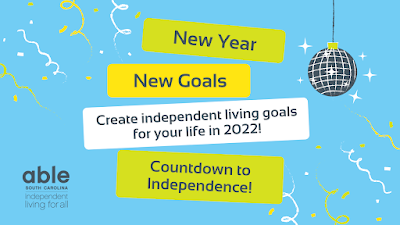
ABLE SC Countdown to Independence New Year 2022 image

A New Year can mean a fresh start! 

Make a plan to reach your independence goals! 

Register for a free online training on Monday, January 24 from 3:00-4:00 PM and learn all about: 

  • Understanding the best types of goals
  • How to make specific, measurable goals
  • How to put those goals into action 
  • and more! 

Registration will close on Sunday, January 23. 

For questions, contact Dori at dtempio@able-sc.org

Register Here!


Thursday, January 13, 2022

Is That Snow? Prepare for Winter Weather

ABLE SC logo
 
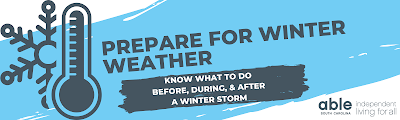
Prepare for winter weather ABLE SC image

Winter weather is on the way; so let's be prepared and stay safe during cold temperatures, snow, and possible ice or sleet. Here are some quick tips on how to prepare for winter weather. You can find details on all of these points in this document from FEMA at the page numbers listed.

Know what to do before, during, and after a winter storm.

Before a storm:

  • Listen to local officials, news, and weather stations (page 14)
  • Know the difference between advisory, watch, and winter storm warnings (page 3)
  • Create and test an emergency contact plan (page 14)
  • Prepare your car (page 6)
  • Prepare your home (page 7)
  • Have a carbon monoxide detector and check to make sure it is working
  • Have emergency supplies in place at home, at work, and in the car (page 13)

During a Storm:

  • Listen to local officials, news, and weather stations
  • Stay home and stay off the road during and after a winter storm (page 8)
  • Keep water running at a trickle to prevent pipes from freezing
  • Bring pets indoors during winter weather (page 7)
  • Take care of yourself: 
      1. Layer up (page 9)
      2. Protect your skin with sunscreen and balm to prevent burns and chapping
      3. Don’t forget your service animal- dogs need protection just like you!

After a Storm:

  • Your home is damaged and no longer safe, or you have lost power, go to a designated public shelter (page 10)

Text SHELTER + your ZIP code to 43362 (FEMA) to find a shelter near you

  • Continue to wear layers, protect your skin, and protect your pets
  • Let your family and emergency contact know you’re safe
  • If you need more support services, contact us at Able South Carolina

Caution: Cold Weather Dangers

Fire (page 7)

  • Never use a heater near blankets, fabric, curtains, or other flammable materials
  • If using a space heater or similar tool for heat, make sure it is in an open space and well ventilated

Carbon Monoxide Kills (page 8)

  • Carbon monoxide is a deadly gas that you cannot see. Fuel-burning heating units that are not vented outside or are not properly maintained can create carbon monoxide in your home.
  • Cars that run on fuel can also be dangerous. Always check your car's tailpipe to make sure it’s clear of ice and snow. Never run your car in an enclosed place. Never run your car in a closed garage, room, or basement space to try and heat your home.
  • Carbon monoxide detectors installed in central locations on every level of your home can warn you and save your life

If your carbon monoxide detector alarms move quickly to fresh air outdoors. Once in a safe place with fresh air, call 911 for help. Do not go back indoors until you are told it is safe.

Medical Emergencies (page 9)

  • If you detect symptoms of frostbite, hypothermia, or other medical emergency seek medical care immediately. Do not wait! Call 911.
  • See page 9 of this document from FEMA to learn more

Watch these videos for how to prepare for any emergency, 

including winter weather and storms!


Wednesday, January 12, 2022

Save these dates - Peer Lead Trainings in 2022!

ABLE SC logo
 
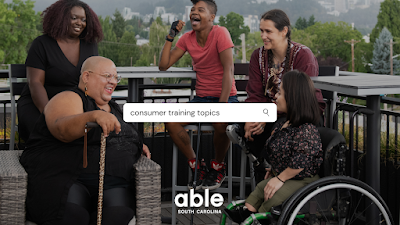
ABLE SC Consumer Training Topics photo

Free Monthly Trainings for People with Disabilities 

Individuals with disabilities are invited to join us for FREE monthly training sessions, all online! Full schedule with descriptions is available for download. Save these dates so you don't miss out on these great opportunities. Stay tuned for registration emails, sent each month before each training event! 

Upcoming Trainings (3:00-4:00 PM):

  • Countdown to Independence! | Webinar January 24, 2022 
  • Reshaping Relationships | Webinar February 14, 202 
  • You've Got Power! | Webinar March 14, 2022 
  • Money Matters | Webinar April 11, 2022 
  • Successful Socializing | Webinar May 23, 2022 
  • Rec at Home | Webinar June 13, 2022 
  • Tools for Access & Independence | Webinar July 11, 2022 
  • Personal Emergency Preparedness (PEP) | Webinar August 22, 2022 
  • Living Independently | Webinar September 12, 2022 
  • Dream It, Plan It, Do It! | Webinar October 24, 2022 
  • Where Should I Live? | Webinar November 7, 2022 
  • Thinking Outside the Box | Webinar December 5, 2022 

Able South Carolina  803.779.5121

advocacy@able-sc.org 


Tuesday, January 11, 2022

Prioritize People With Intellectual Disabilities for COVID Treatment

MedPage Today logo

Prioritize People With Intellectual Disabilities
for COVID Treatment
— This at-risk group has not received adequate attention

by Wendy Ross, MD, and Jonathan Gleason, MD 
January 10, 2022

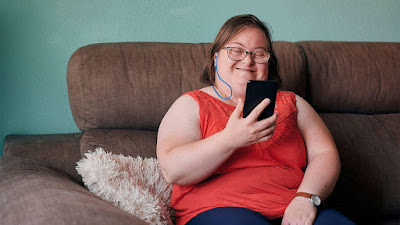
 Woman with Down's Syndrome looking at her cellphone and smiling photo

The FDA's emergency use authorizations of monoclonal antibodies and more recently molnupiravir and nirmatrelvir/ritonavir (Paxlovid) for treating COVID-19 in people at high risk for severe disease brings great hope to the world and the global community of people impacted by intellectual disability. But access barriers pose a challenge. It is critically important that healthcare providers make these life-saving treatments available immediately to people with intellectual disabilities who test positive for COVID-19 -- and advocate for those high-risk individuals.

We struggled to get this right during the initial rollout of COVID-19 vaccines. In March 2021, our research group released a study in the New England Journal of Medicine-Catalyst where we described the devastating impact of COVID-19 on individuals with intellectual disabilities. Indeed, our analysis of 64 million medical records across the U.S. demonstrated that having an intellectual disability is the highest risk factor for getting COVID-19 and, second only to age, for dying from it. Tragically, when admitted to the hospital with COVID-19, those with an intellectual disability were 32% more likely to die as inpatients. The CDC has now recognized the robust evidence that having an intellectual disability is a significant risk factor for death from COVID-19.

Our study, and others like it, led to the expansion of vaccine prioritization to people with intellectual disabilities in more than a dozen states as well as in Japan and other countries around the world. Civil rights lawsuits against Connecticut and Maryland allege they failed to prioritize intellectually disabled persons for vaccination. Ultimately, most states and countries failed to follow the clear evidence regarding this high-risk group with their early vaccine deployments.


Wendy Ross, MD, is director of the Jefferson Center 
for Neurodiversity and Autism.

Jonathan Gleason, MD, is chief clinical officer of Prisma Health.


Monday, January 10, 2022

BrainStorm -- Young Adult Support and Advocacy Group

Brain Injury Association of SC logo

 Brainstorms graphic logo

A support and advocacy group for young adults who have been impacted by brain injury

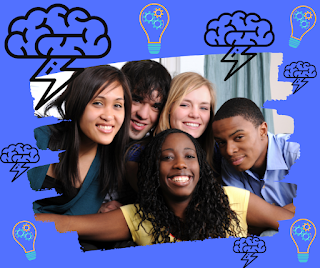
Photo of young people with graphic images of brains and light bulbs for promoting Brainstorm group

What is BrainStorm?

BrainStorm is a group for young adults (ages 15-29) who are striving to advocate, educate, and create a safe space for individuals that have been affected by concussions, traumatic brain injuries, or acquired brain injuries in any capacity. 

This group strives to bring visibility to this 'invisible' injury through education, advocacy, open-communication, and support.

WHO:
  • This is a group is open to survivors, family, friends, and advocates of brain injury 
  • Anyone between the ages 15-29 years of age is encouraged to attend
  • Someone who has a brain injury that impacts their life in at least one way on a regular basis, such as Traumatic Brain Injury (TBI) or Concussion (also known as mild Traumatic Brain Injury - mTBI)
  • Someone whose parent, neighbor, friend, sibling, significant other, etc. is living with a brain injury

WHAT ARE THESE MEETINGS:

Join Facilitator, Young Adult, and Brain Injury Survivor Jasmine Norris as she assists youth in:
  • Finding community and peer support - you are not alone in your experience with brain injury!
  • Educating anyone and everyone in your community about brain injuries

WHERE:
  • Virtual Meetings will be held on Zoom once a month
  • 3rd Wednesday of every month from 6:30 - 8 pm EST

2022 Dates:
  • January 19
  • February 16
  • March 16
  • April 20
  • May 18
  • June 15
  • July 20
  • August 17
  • September 21
  • October19
  • November 16
  • December 15

HOW TO GET MORE INFORMATION:
  • Contact Brain Injury Safety Net Coordinator, Rachel Kaplan by clicking here.
  • Join our Facebook Group by clicking here. As a reminder, this group will only accept youth ages 15-29 years of age to create a safe and inviting peer support space.
  • Download the informational PDF and share with anyone that may be interested by clicking here.


Friday, January 07, 2022

Variants- What are they?

Protect Your Community. Secure Your Shot. Promo from SC Disability Vaccine Access Network

COVID-19 Variant Facts 

What is a COVID-19 variant?  

A COVID-19 variant is a version of the COVID-19 virus that’s just a little different from the version before it.  Some of the most common differences are that COVID-19 variants can spread faster and more easily and can also make you sicker.  For example, the Alpha variant spread just a little faster than the original version of the COVID-19 virus.    

Two of the variants that you might hear a lot about are the Delta and Omicron variants. That is because both of these variants spread easily and can make you very sick.   

Variants of viruses are common. People with disabilities may be at a higher risk of getting COVID-19 and they are also at higher risk of getting COVID-19 variants. 

Hear from champions in your community. 

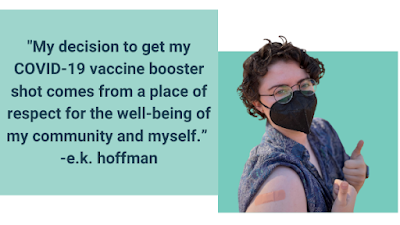
Quote from E.K. Hoffman

As a person with a disability, how can I protect myself from COVID-19 variants?  

The best way for people with disabilities to protect themselves from COVID-19 variants is by getting a vaccine. A vaccine may not stop you from getting sick, but it will help lower the risk that you will get very sick and go to the hospital with a COVID-19 variant.    

If you have already gotten your vaccine, getting a booster shot is another way you can help protect yourself from COVID-19 variants. This makes your immune system stronger to fight the virus. Learn more about booster shots from our previous e-newsletter. 

Talk to your doctor, or another medical provider you trust, about which COVID-19 vaccine is the best for you. If you need help scheduling your vaccine, have questions, or are experiencing difficulty with getting your vaccine, you can call the SC Disability Vaccine Access Hotline (1-800-787-6046)

Information source: Centers for Disease Control and Prevention. (2021, December 1). What You Need to Know About Variants. Centers for Disease Control and Prevention. Retrieved December 3, 2021, from https://www.cdc.gov/coronavirus/2019-ncov/variants/variant.html. 

Make your vaccination plan today 

The SC Disability Vaccine Access Network is here to help reduce barriers to vaccine access. Learn more about how to make an appointment at SCDisabilityVaccine.org or call us at 1-800-787-6046 for more information. 

SCDisabilityVaccine.org

Contact our Vaccine Access Helpline at 1-800-787-6046. 


Thursday, January 06, 2022

Registration Deadline Extended!

Brain Injury Association of South Carolina logo
 
Brain Injury Fundamentals Training Now Available promotion

The deadline has been extended!

Register by January 9, 2022 
for the Brain Injury Fundamentals Training!

Are you a caregiver of a person with a brain injury, 
a professional or anyone who is interested in receiving a 
Brain Injury Fundamentals Certificate?  

Then this is the class for you! 

Brain Injury Fundamentals is an essential training and certificate program designed for direct care staff, family members, and individual caregivers. The training course covers essential topics such as cognition, medical complications, and medication safety and management.
 
When:         

Wednesday, February 2, 2022  9:00 AM – 12:00 PM
Wednesday, February 9, 2022  9:00 AM – 12:00 PM
Wednesday, February 16, 2022 9:00 AM – 12:00 PM
Wednesday, February 23, 2022 9:00 AM – 12:00 PM
 
Where: Online via Zoom Platform        
 
12.0 CEUs available for Social Workers (must attend all four classes)
 
Fees: $50 includes workbook, training, and exam
      
Scholarships available for Unpaid Caregivers
 
Instructors:    

Kay Brooks, MA, CBIST
Director, Head and Spinal Cord Injury Services
Thrive Upstate
 
Ella Durham, MRC, NCC, CCM, CCTP, CBIS 
Certified Case Manager
Midlands Regional Rehabilitation Hospital
 
Meghan Trowbridge, LISW-AP, CBIST, C-ASWCM
Assistant Director, Center for Disability Resources
USC School of Medicine
 
To Register:  


*Class is limited to 25 participants.
 
If you have any questions, please contact Kristi Hartwell at coordinator@biaofsc.com or 803-731-9823.

Wednesday, January 05, 2022

Free Webinars!

Accessible Technology Coalition logo

This list of free webinars is compiled from around the Web 
by the Accessible Technology Coalition

Follow the ATC Facebook page for late additions.


Free Webinars re: K-12 Students

        January 6, 2022 at 1pm Pacific, 4pm Eastern

        January 12, 2022 at 12pm Pacific, 3pm Eastern

        January 15, 2022 at 12pm Pacific, 3pm Eastern (90 min.)

Adults or All Ages

        January 11, 2022 at 9am Pacific, 12pm Eastern


Tuesday, January 04, 2022

Happy New Year! Empower Hour 2022!

ABLE SC logo
 
Empower Hour image

EMPOWER HOUR 2022

Peer Networking - Discover your power!

Able South Carolina offers peer groups for individuals with all types of disabilities. Our Empower Hour is led by your peers and meets to discuss independence, share resources, make new friends, and give support to each other.

Empower Hour is a great chance to connect with others. Individuals with disabilities can participate in one of our online peer groups.

If you are interested in participating in our online discussion, please RSVP at least a day before the meeting, so that we can sign you up and give you the log-in information. If you would like to join, please call 803-779-5121, TTY: 803-779-0949, or email, dtempio@able-sc.org.

To make a request for accommodation based upon disability, please call us at 800-681-6805 a week before the event. 

Empower Hour Meetings

Weekly on Google Meet on

Tuesdays and Thursdays: 1:00 PM – 2:00 PM

meet.google.com/ive-hevx-jrj 

Call-in Number-

+1 402-824-0092 

PIN: ‪838 332 043#

We hope to see you soon at Empower Hour!